Guides · Apalachicola, Florida
Apalachicola in a Day: A Practical Itinerary
Apalachicola is small enough to cross on foot in twenty minutes, but its history is dense enough to require a full day.
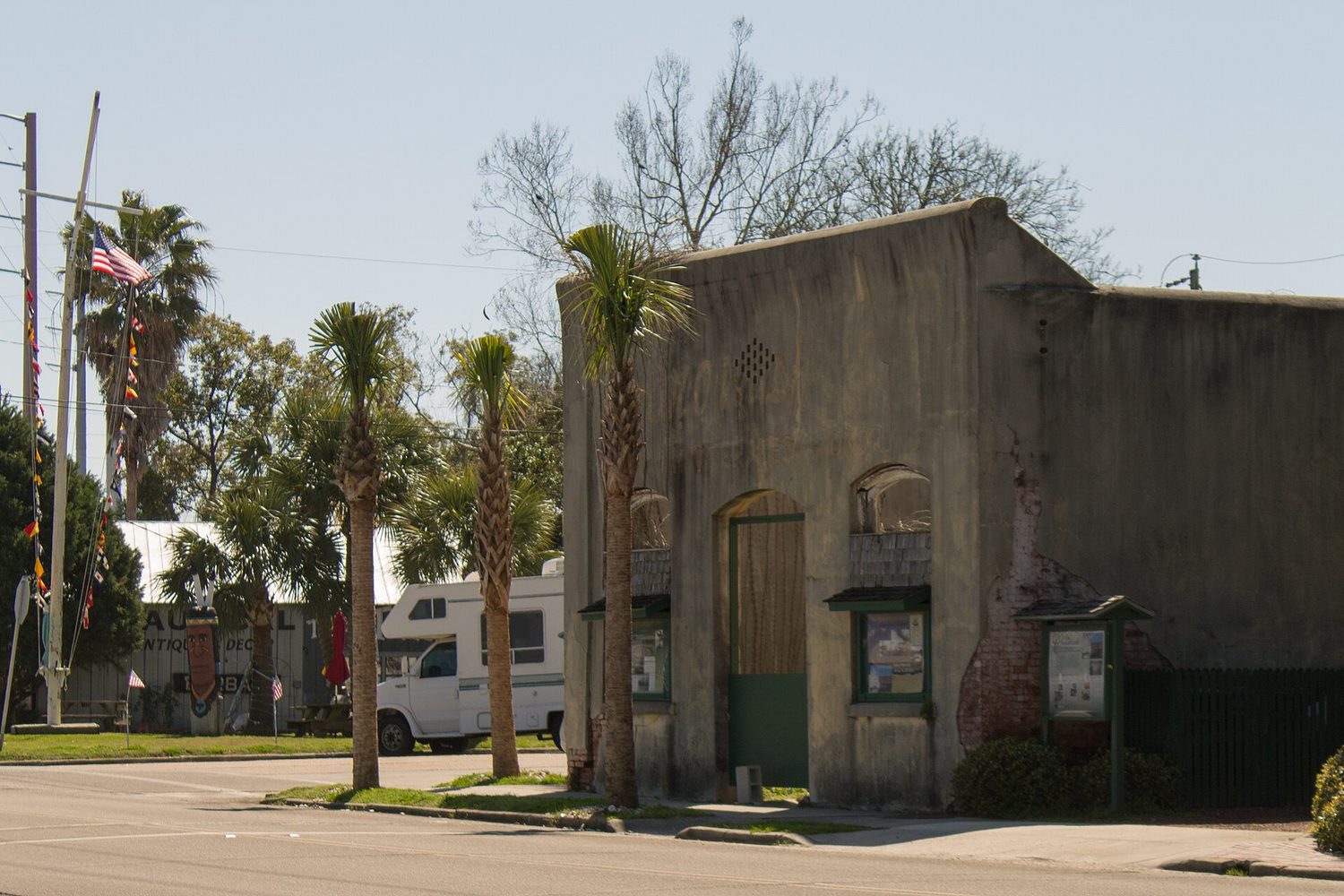
Morning: The River and the Ice Machine
Start at Battery Park, at the mouth of the Apalachicola River. It is the town’s waterfront green, and the ground on which the Florida Seafood Festival is held. On an ordinary morning, it is simply where the river meets the bay. The park is rated 4.5 from 555 reviews, and it earns that from location alone. Stand at the water’s edge and consider that this river carried timber worth $2,000,000 in 1898 and $13,324,000 by 1903.
From Battery Park, walk inland to John Gorrie Museum State Park on Sixth Street. The site was donated to the State of Florida in 1955, and the one-storey brick museum building was constructed in 1957. Gorrie practised medicine here during an 1841 yellow fever outbreak. He cooled sickrooms with ice, then built a machine to make it. He received an 1851 patent for mechanical refrigeration. The museum exists to commemorate that invention. It is a quiet, specific place. Give it an hour.
Late Morning: The Orman House and the Streets
A short walk away is Orman House Historic State Park on Market Street. The grounds include the Chapman Botanical Garden and the Three Soldiers Detail South memorial. Rated 4.6 from 211 reviews, it is the kind of place that rewards a slow circuit. The house itself is not the point; the grounds are.
From there, drift through the blocks between Market Street and Avenue E. The census counts 2,304 people here, with a median age of 51.8. Nearly a third of housing units—191 of 1,506—are held for seasonal or recreational use. You will feel that in the quiet streets.
Lunch: Raw Bars and Cafés
The eating options are concentrated and honest. The Station Raw Bar on Market Street holds a 4.6 rating from 1,211 reviews. It is a raw bar; the name tells you what it does. Across the street, Hole In The Wall Seafood And Raw Bar on Avenue D sits at 4.4 from 990 reviews. Both are direct, no-frills operations. You will not need a reservation, and you should not expect one.
If you want something lighter, Tamara's Café on Market Street is rated 4.1 from 578 reviews. Owl Café on Avenue D, the highest-reviewed restaurant in town at 4.3 from 1,280 reviews, is a dependable lunch stop. The Biscuit Factory on Water Street carries the best rating in the group—4.8 from 149 reviews—but it is a small operation with limited hours. Go early or skip it.
Afternoon: The Parks and the Waterfront
Walk off lunch at Lafayette Park on Avenue B. Rated 4.5 from 201 reviews, it is a shaded square in the residential grid. It is not a destination; it is a pause. Sit on a bench. Watch the light move.
Then return to the waterfront. The history here is layered. Oysters were sold locally as early as 1836. The Ruge Brothers Canning Company was established in 1885. Sponging employed between 80 and 120 men by 1895, working from 16 vessels. The town carried three names in as many decades—Cottonton, then West Point on incorporation in 1828, then Apalachicola from 1831. All of that happened within a few hundred yards of where you are standing.
Early Evening: A Drink and a Meal
The Tap Room on Commerce Street is rated 4.3 from 529 reviews. It is a bar with food, not a restaurant with a bar. Stop in for a drink. Up To No Good Tavern on Market Street is rated 3.7 from 134 reviews; it is smaller, rougher, and fine for what it is.
For dinner, The Franklin Café at The Gibson Inn on Avenue C is rated 3.8 from 396 reviews. The rating is modest, but the setting is the Gibson Inn, and that matters. If you want something plainer, Hong Kong Bistro on US-98 is rated 4.3 from 284 reviews. It is a mile out of the historic district, but it is a real option.
One caution: Burger King on US-98 is rated 2.4 from 277 reviews. It exists. You should not need to be told more.
Night: The Festival and the Numbers
If you are here on the first weekend of November, the Florida Seafood Festival runs two days at Battery Park. It is billed as Florida’s oldest maritime event and draws tens of thousands. The 63rd annual edition is scheduled for 6–7 November. That is the one day of the year the town is not quiet.
The rest of the year, Apalachicola is a town of 2,304 people with a median household income of $61,083 and a median home value of $247,900. The unemployment rate is 5.8 percent. The median gross rent is $1,235. A third of adults hold a bachelor’s degree or higher. These are not tourist numbers. They are the numbers of a place that works.
The Practical Part
Wear shoes for walking. Bring water. The town is compact, but the heat is real. Park once and leave the car. The distance from Battery Park to the Orman House is less than a mile, and everything worth seeing is between them.
Do not try to do everything. Pick one raw bar, one café, one park. The town rewards patience more than efficiency. You can see the Gorrie museum, walk the Orman grounds, eat a meal, and watch the river in a single day. That is enough.
Apalachicola is not a resort. It is a working river town with a remarkable past. The ice machine, the oysters, the timber, the sponges—they are all still visible in the streets and the water. Spend the day looking for them.
Every business named above is one we hold a listing for, and every date traces to a source on our sources page. We do not describe menus, interiors or service we have not verified. Details change — confirm before you travel.