Guides · Apalachicola, Florida
Free Things to Do in Apalachicola
The town’s history is the attraction, and none of it costs a cent to see.
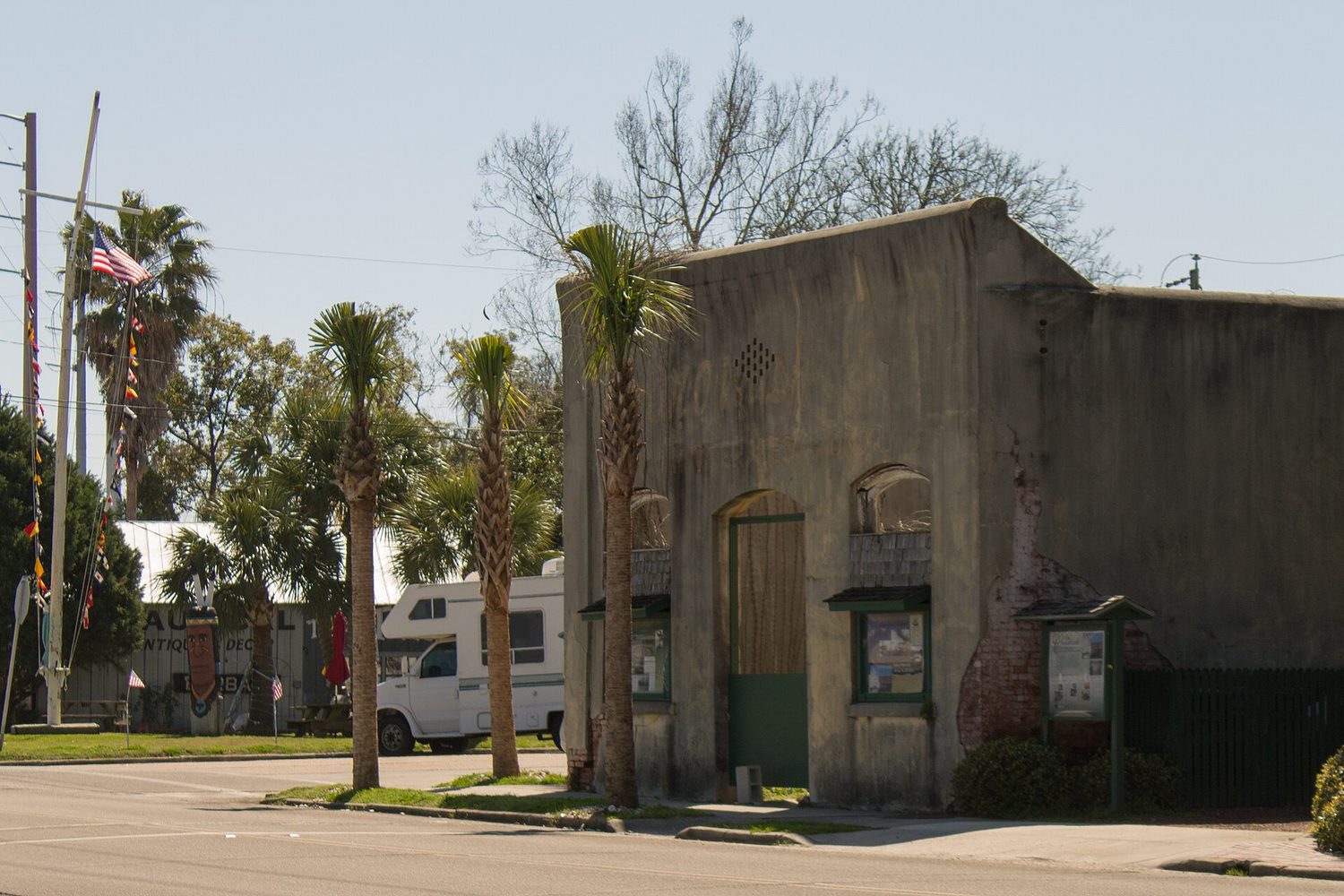
Apalachicola is a small place—2,304 people, a median age of 51.8—and its free offerings are not amusements. They are the physical remains of a working waterfront and the public spaces built around it. The town carried three names in as many decades: first Cottonton, then West Point on incorporation in 1828, and finally Apalachicola from 1831. You can walk that history in an afternoon.
The Waterfront
Start at Battery Park, at the mouth of the Apalachicola River. It is the town’s waterfront green, rated 4.5 from 555 reviews. It is also the ground on which the Florida Seafood Festival is held, billed as the state’s oldest maritime event. The festival draws tens of thousands; the park itself, on an ordinary day, holds fewer. Stand at the river’s edge and consider what moved through here.
A short walk along Water Street brings you to Apalachicola City Dock, rated 4.7 from 97 reviews. This is not a scenic overlook. It is a working dock. Boats tie up, nets get mended, and the business of the bay continues around you. Watch it. Then continue to Historic Apalachicola at 86 Water Street, rated 4.7 from 18 reviews. It is a modest address for a dense story: sponging was a mainstay from the mid-1870s, with 16 sponge vessels working in 1879, and by 1895 between 80 and 120 men were employed in the trade.
The Gorrie Story
No visit to Apalachicola makes sense without Dr. John Gorrie. He practised medicine here, where an 1841 yellow fever outbreak led him to cool sickrooms with ice and then to build a mechanical ice-making machine. He received an 1851 patent for mechanical refrigeration. He is recognised as the father of air conditioning and refrigeration.
John Gorrie Museum State Park sits on Sixth Street, rated 4.3 from 85 reviews. The site was donated to the State of Florida in 1955, and the one-storey brick museum building was constructed in 1957. It was built to commemorate that invention. The museum itself may charge admission; the grounds and the historical weight do not. Stand outside and think about what a doctor in a fever town had to build to save his patients.
The Houses and the Trees
Orman House Historic State Park on Market Street, rated 4.6 from 211 reviews, offers its grounds freely. The property includes the Chapman Botanical Garden and the Three Soldiers Detail South memorial. You do not need to enter the house to understand the era. The trees and the garden do that work.
Raney House Museum at 128 Market Street, rated 4.8 from 126 reviews, is the highest-rated site in town. Again, the museum has its own admission; the exterior and the street it stands on are yours. Look at the architecture. This was a town that made money—timber commerce rose from $2,000,000 in 1898 to $13,324,000 in 1903—and it built accordingly.
The Quiet Edges
Lafayette Park on Avenue B, rated 4.5 from 201 reviews, is a plain green space. Use it as the town does: for sitting, for shade, for nothing in particular. Seafood Landing Park on US-98, rated 4.7 from 50 reviews, is further out and quieter still. It is a place to watch the water without the crowd.
St. Vincent National Wildlife Refuge at 3100 County Road 30A, rated 4.1 from 32 reviews, requires a boat to reach, so it is not strictly free unless you have your own. The refuge itself charges no entry. Factor in the crossing and decide for yourself.
Sudsy Cycle Laundromat at 95 Avenue I, rated 4.2 from 20 reviews, is on the list of beaches, which tells you something about how this town categorises things. It is a laundromat. It is not a tourist site. It is, however, real life in a town where 191 of 1,506 housing units are held for seasonal or recreational use. The other 1,315 are homes.
For the Practical
Apalachicola Dog Park on Avenue L, rated 4.2 from 85 reviews, is exactly what it says. Splash Pad & Playground at 192 14th Street, rated 3.9 from 7 reviews, is for children. Lori's Native and Tropical Plants at 30 Avenue G, rated 3.6 from 5 reviews, is a nursery, not a park, but it costs nothing to look. Fishing Pier, rated 3.7 from 12 reviews, is a pier.
The census numbers tell a story of their own. Median household income is $61,083. Median home value is $247,900. Median gross rent is $1,235. The unemployment rate is 5.8 percent. Thirty-two point nine percent of residents hold a bachelor’s degree or higher. This is not a rich town. It is a town that has always worked for a living, first in sponges, then in oysters—sold locally as early as 1836, with the Ruge Brothers Canning Company established in 1885—then in timber.
The first Apalachicola Northern Railroad engine reached the town on 30 April 1907. The tracks are still there. So is the river. So is the history. Walk it. It is free.
Every business named above is one we hold a listing for, and every date traces to a source on our sources page. We do not describe menus, interiors or service we have not verified. Details change — confirm before you travel.