Guides · Apalachicola, Florida
Apalachicola in Fall: What to See, Eat & Do
Apalachicola in fall is a working river port, not a resort. Its seasons are still measured in sponge, timber, and oysters, with the Florida Seafood Festival closing out the year.
A River Town, Not a Resort
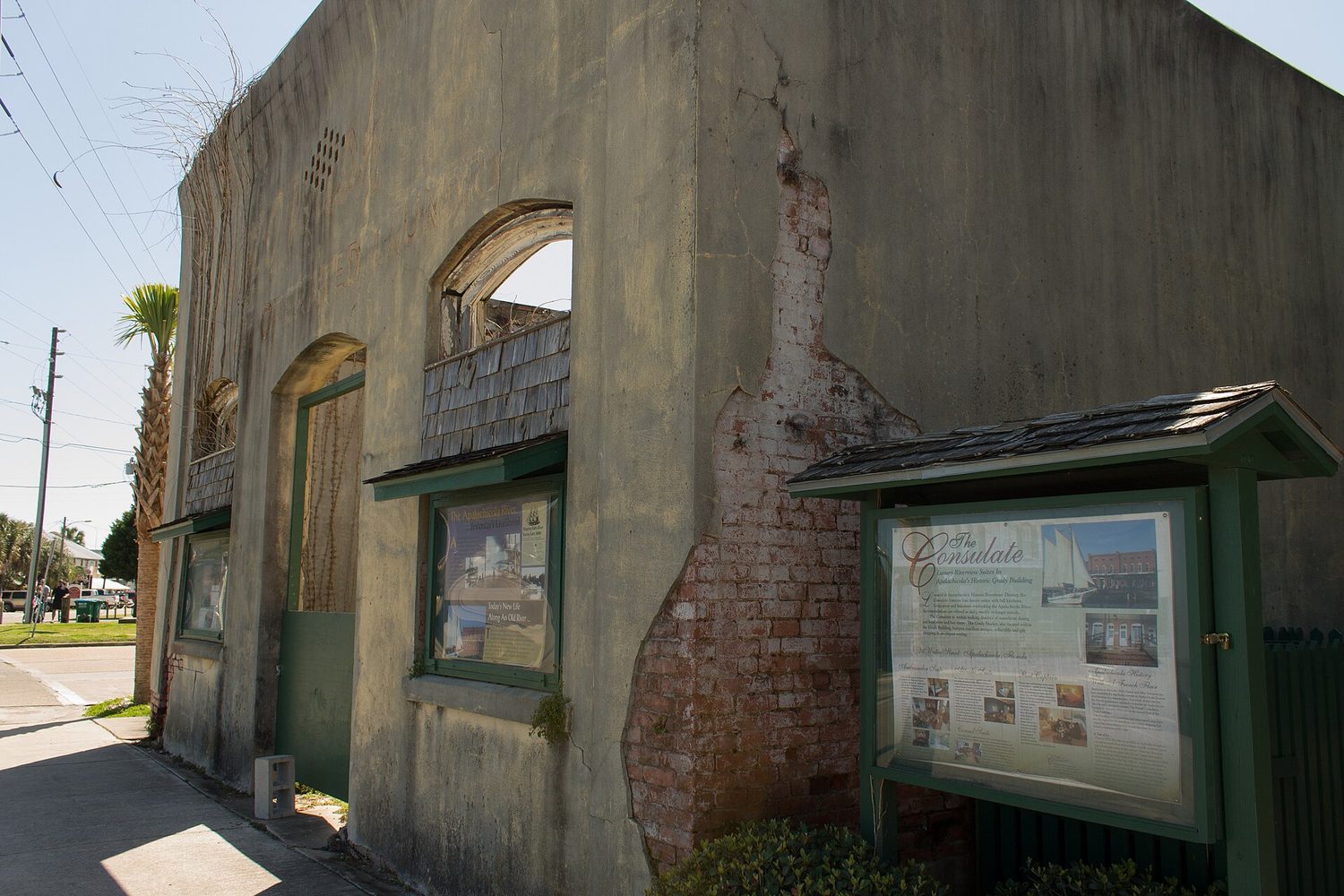
The town sits at the mouth of the Apalachicola River, named West Point on incorporation in 1828 and Apalachicola from 1831. Its economy has always tracked the water. Sponging employed 80 to 120 men by 1895. Timber commerce rose from $2,000,000 in 1898 to $13,324,000 in 1903. The first Apalachicola Northern Railroad engine arrived on 30 April 1907. Oysters were sold locally as early as 1836. In fall, the landscape shows this: the river traffic, the working waterfront, the houses built on timber money. This is not a beach town.
The Festival at the River's Mouth
The Florida Seafood Festival, billed as Florida's oldest maritime event, takes place at Battery Park, at the mouth of the Apalachicola River. The 2026 edition is on 6-7 November, the 63rd annual, and draws tens of thousands. For two days, the town's waterfront green becomes the center of its autumn calendar. The park is the ground on which the festival is held every year—a flat, open space where the river meets the bay.
Oysters and the Raw Bars on Market Street
The oyster trade is a fall mainstay, and Market Street holds the raw bars. The Station Raw Bar and Hole In The Wall Seafood And Raw Bar are the two names that come up most often. Neither requires a menu to understand: you order oysters, you eat them at the counter or a table, you leave. Both sit within a block of the water, and both are best approached with the simple expectation of fresh product, not ambiance.
| Place | What to Expect |
|---|---|
| The Station Raw Bar | A straightforward raw bar on Market Street, rated 4.6 from 1211 reviews; expect oysters and little else. |
| Hole In The Wall Seafood And Raw Bar | A 4.4-rated raw bar on Avenue D, a short walk from the waterfront; the name is accurate. |
For a quick meal beyond oysters, Tamara's Café on Market Street and The Tap Room on Commerce Street offer counter service and pub fare respectively. Owl Café on Avenue D, rated 4.3, is the most-reviewed restaurant in town.
The Doctor Who Made Ice
Dr. John Gorrie (1803-1855) practised medicine here when yellow fever struck in 1841. He cooled sickrooms with ice, then built a machine to make it mechanically. He received an 1851 patent for mechanical refrigeration. The John Gorrie Museum State Park on Sixth Street commemorates the invention; the site was donated to the State of Florida in 1955 and the one-storey brick museum was constructed in 1957. It is a modest building for a man who is recognised as the father of air conditioning and refrigeration—a good indoor stop on a cool fall day.
Walking the Historic Districts
A walking route through the historic core starts at Orman House Historic State Park on Market Street, whose grounds include the Chapman Botanical Garden and the Three Soldiers Detail South memorial. From there, Lafayette Park on Avenue B is a few blocks north. Avenue D and Market Street hold the mix of cafés and shops, including The Biscuit Factory on Water Street and Izzy's Cafe on Avenue E—the former rated 4.8 from 149 reviews, the latter 4.6 from 124. Dolore's Sweet Shoppe on Avenue E covers dessert. The route is short enough to walk in an hour, and the houses along the way show the timber-era money.
Beyond the Town: Day Trips into the Season
Before or after the festival, the season is quiet. St. George Island, 9 miles away, holds its own Chili Cook-Off in fall. Port St. Joe, 23 miles south, has the Florida Scallop, Music & Arts Festival. Both are day trips, not destinations. The town itself has a population of 2304, a median age of 51.8 years, and a median household income of $61,083. The pace in fall, outside festival weekend, reflects that.
The festival answers the question of when Apalachicola is most alive: 6-7 November 2026, at Battery Park. The best oysters are a matter of which raw bar you choose on Market Street. The Gorrie Museum tells the story of ice. The historic sites—Orman House, Lafayette Park, the streets themselves—hold the rest.
Common questions
- What is there to do in Apalachicola in the fall?
- The Florida Seafood Festival is held at Battery Park on 6-7 November 2026, its 63rd annual. You can also visit the John Gorrie Museum State Park or Orman House Historic State Park. The town's population is 2,304, so it remains quiet.
- Where should I eat in Apalachicola?
- The Station Raw Bar is rated 4.6 from 1,211 reviews at 53 Market St. The Biscuit Factory is rated 4.8 from 149 reviews at 254 Water St. Owl Café at 15 Ave D has 4.3 from 1,280 reviews. Hole In The Wall Seafood And Raw Bar is at 23 Ave D.
- What is the history of ice-making in Apalachicola?
- Dr. John Gorrie, who practiced medicine here, built a mechanical ice-making machine after an 1841 yellow fever outbreak. He received a patent in 1851. The John Gorrie Museum State Park on Sixth Street commemorates his invention. The site was donated in 1955, and the museum building was constructed in 1957.
- Is Apalachicola a good place for a weekend trip?
- Yes. The median age is 51.8, and 191 of 1,506 housing units are for seasonal or recreational use. Median home value is $247,900. Nearby St. George Island is 9 miles away. The town has several parks, including Battery Park and Lafayette Park.
- What seafood is Apalachicola known for?
- Oysters have been sold locally since 1836, and the Ruge Brothers Canning Company was established in 1885. Sponging was a mainstay from the mid-1870s, with 16 sponge vessels in 1879. The Florida Seafood Festival is billed as the state's oldest maritime event.
- Are there any parks in Apalachicola?
- Battery Park, at the mouth of the Apalachicola River, is rated 4.5 and hosts the Florida Seafood Festival. Orman House Historic State Park is rated 4.6 and includes the Chapman Botanical Garden. Lafayette Park is rated 4.5. John Gorrie Museum State Park is also on Sixth Street.
Every business named above is one we hold a listing for, and every date traces to a source on our sources page. We do not describe menus, interiors or service we have not verified. Details change — confirm before you travel.