Guides · Apalachicola, Florida
Day Trips from Apalachicola: History & Seafood
Apalachicola's history isn't a backdrop. It's the reason the town exists in its current form—a place where fever produced ice, oysters preceded the railroad, and the waterfront still dictates the calendar.
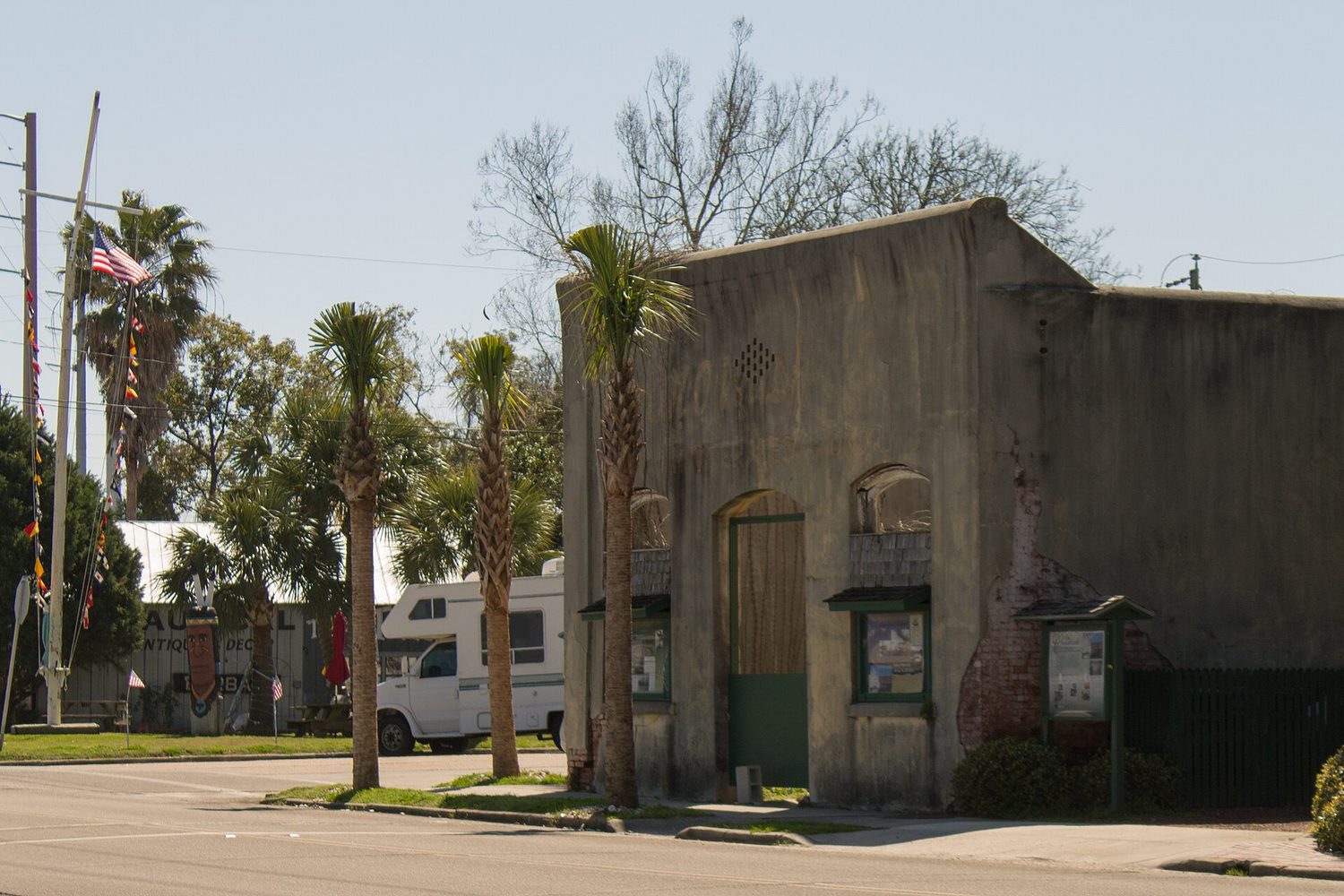
John Gorrie Museum: The Ice Machine That Shaped Apalachicola
In 1841, yellow fever moved through Apalachicola. Dr. John Gorrie, a physician practising here, responded by cooling sickrooms with ice brought down from the north. When that supply proved unreliable, he built a machine to make ice mechanically. He received a patent for mechanical refrigeration in 1851. The town's identity is anchored to that act of medical improvisation.
Visitors should start at the John Gorrie Museum State Park on Sixth Street. The land was donated to the State of Florida in 1955, and the one-storey brick museum was constructed in 1957. It exists specifically to commemorate the 1851 patent. This is the single most important historical site in Apalachicola: it explains how a small port town produced a foundational technology for the modern world.
Walking Apalachicola's Waterfront: Three Names, One History
The settlement was first called Cottonton, then incorporated as West Point in 1828, and took the name Apalachicola in 1831. Three names in three decades. The waterfront holds the evidence of those layers.
Battery Park sits at the mouth of the Apalachicola River, the town's green edge where the river meets the bay. It is the ground on which the Florida Seafood Festival is held. Walking from the park along the riverfront, you are tracing the same ground that made the town worth naming at all—a deep-water port on a river draining a vast timber country. The names changed, but the water did not.
Apalachicola's Seafood Economy: Oysters Before the Railroad
Oysters were sold locally in Apalachicola as early as 1836, decades before any rail line reached the town. The Ruge Brothers Canning Company was established in 1885 by Herman Ruge and his sons, formalising an industry that had existed informally for fifty years.
That timeline matters: seafood was not a later addition to a timber town; it was a foundation. The Florida Seafood Festival, billed as Florida's oldest maritime event, is a living continuation of that economy. The 2026 edition, on 6–7 November, is the 63rd annual. It happens at Battery Park, on the same waterfront where the oysters were sold in 1836.
Apalachicola's Boom Years: Sponges, Timber, and the Railroad
The numbers tell a compressed story of extraction and transport. Sponging became a mainstay from the mid-1870s: Apalachicola had 16 sponge vessels working in 1879, and by 1895 between 80 and 120 men were employed in the trade. Timber commerce rose from $2,000,000 in 1898 to $13,324,000 in 1903—a sixfold increase in five years. The first Apalachicola Northern Railroad engine reached the town on 30 April 1907, finally connecting this river port to the wider rail network.
These are not static museum facts. The sponge boats are gone, the timber boom has passed, and the railroad no longer defines the town's rhythm. But the pattern they established—extract, process, ship—is the reason the town has a waterfront park, a festival, and a museum at all.
Day Trip Itineraries from Apalachicola: Festivals & Nearby Towns
The Florida Seafood Festival at Battery Park is the anchor, but the surrounding towns offer their own historical echoes. Each is a day trip measured in hours, not in cultural distance.
| Festival Town | Distance from Apalachicola |
|---|---|
| St. George Island | 9 miles |
| Port St. Joe | 23 miles |
| Cedar Key | 141 miles |
| Perry | 101 miles |
| Steinhatchee | 112 miles |
| Dade City | 215 miles |
St. George Island, nine miles away, hosts the St. George Island Chili Cook-Off—a different flavour of gathering, closer and smaller. Port St. Joe, 23 miles away, offers the Florida Scallop, Music & Arts Festival, which ties to the Gulf's recreational harvest culture. Cedar Key, 141 miles away (roughly a two-and-a-half-hour drive), holds the Cedar Key Seafood Festival, another maritime town with its own history of fishing and processing.
Each festival is a day trip with its own character. But none of them replicate what Apalachicola has: a festival held on a park that sits at the mouth of a river that built the town.
What the Census Says About a Place That Keeps Its Own Hours
The census figures describe a town that does not move at the pace of a commuter suburb. The population is 2,304 people, with a median age of 51.8 years. Of the 1,506 total housing units, 323 are vacant and 191 are held for seasonal or recreational use—roughly one in eight homes is a part-time residence.
Median household income is $61,083, and the unemployment rate is 5.8 percent. Median home value is $247,900; median gross rent is $1,235. Over 30 percent of residents hold a bachelor's degree or higher. These are not boomtown numbers, nor are they decline. They describe a place with a stable core and a seasonal overlay.
For a visitor, the census data is a practical guide: this is a town that rewards slow, deliberate visits. The seasonal housing means the population swells and contracts with the calendar. The high vacancy rate means you are not visiting a place built for constant turnover; you are visiting a place that keeps its own hours. The festivals—especially the Seafood Festival in November—are the moments when that rhythm becomes visible.
The day-trip circuit around Apalachicola is best measured in decades, not miles. Start at the museum built for a doctor's patent, stand at the park where the river meets the bay, and then consider the nine miles to St. George Island or the 141 to Cedar Key. The distances are short. The history is not.
Common questions
- What is the history of Apalachicola's name?
- The settlement was first called Cottonton, then incorporated as West Point in 1828, and finally renamed Apalachicola in 1831. So it carried three names in as many decades.
- Who was Dr. John Gorrie and why is he important?
- Dr. John Gorrie practiced medicine in Apalachicola. After an 1841 yellow fever outbreak, he cooled sickrooms with ice and built a mechanical ice-making machine. He received an 1851 patent for mechanical refrigeration and is recognized as the father of air conditioning and refrigeration.
- What can I see at the John Gorrie Museum State Park?
- The John Gorrie Museum State Park on Sixth Street commemorates Gorrie's invention. The site was donated to the state in 1955, and the one-story brick museum was built in 1957. It honors his 1851 patent for mechanical refrigeration.
- When is the Florida Seafood Festival held?
- The Florida Seafood Festival is a two-day event at Battery Park at the mouth of the Apalachicola River. The 2026 edition is on November 6-7, and it is the 63rd annual. It draws tens of thousands and is billed as Florida's oldest maritime event.
- What are the demographics of Apalachicola?
- The population is 2,304 people, with a median age of 51.8 years. The median household income is $61,083, and the median home value is $247,900. About 32.9% of residents have a bachelor's degree or higher, and the unemployment rate is 5.8%.
- What is there to do at Orman House Historic State Park?
- Orman House Historic State Park is on Market Street. Its grounds include the Chapman Botanical Garden and the Three Soldiers Detail South memorial. It offers a look at historic architecture and garden spaces.
Every business named above is one we hold a listing for, and every date traces to a source on our sources page. We do not describe menus, interiors or service we have not verified. Details change — confirm before you travel.