Guides · Apalachicola, Florida
16 Things to Know Before Visiting Apalachicola, FL
A working waterfront of 2,304 people where the history is structural, not decorative. Here are sixteen things to know before you go.
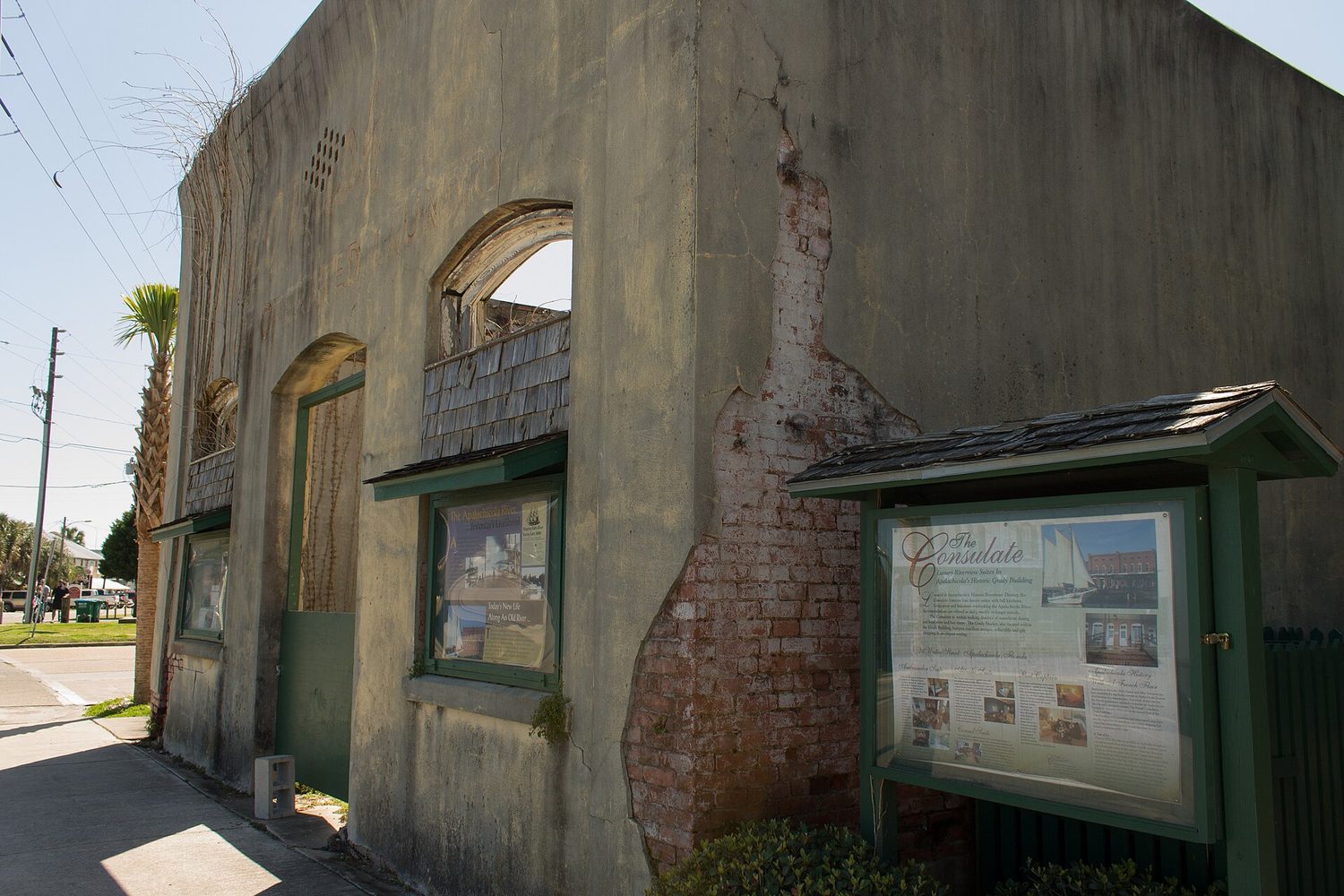
Apalachicola's Name History: From Cottonton to Today
The settlement carried three names in as many decades: first Cottonton, then West Point on incorporation in 1828, and finally Apalachicola from 1831. The current name has been in use for nearly two centuries, but the town's legal identity is a matter of record, not legend.
Dr. John Gorrie: The Ice Machine That Started It All
Dr. John Gorrie (1803–1855) practised medicine in Apalachicola, where an 1841 yellow fever outbreak led him to cool sickrooms with ice and then to build a mechanical ice-making machine. He received an 1851 patent for mechanical refrigeration, the invention the Apalachicola museum was later built to commemorate. He is recognised as the father of air conditioning and refrigeration. The John Gorrie Museum State Park on Sixth Street stands on a site donated to the State of Florida in 1955; the one-storey brick museum building was constructed in 1957.
Apalachicola's Oyster Industry: A Legacy Since 1836
Oysters were sold locally as early as 1836, and the Ruge Brothers Canning Company was established in 1885 by Herman Ruge and his sons. The industry remains the town's economic spine, though the water conditions that support it are not guaranteed.
How Timber Shaped Apalachicola's Historic District
Timber commerce rose from $2,000,000 in 1898 to $13,324,000 in 1903, and the first Apalachicola Northern Railroad engine reached the town on 30 April 1907. The boom financed the historic district you will walk through; the railroad made it possible to move the product out.
Before Oysters: Apalachicola's Sponge Trade
Sponging was a mainstay from the mid-1870s: Apalachicola had 16 sponge vessels working in 1879, and by 1895 between 80 and 120 men were employed in the trade. The industry collapsed eventually, but it established the town's pattern of extracting from the bay.
Florida Seafood Festival: Apalachicola's Biggest Event
The Florida Seafood Festival is billed as Florida's oldest maritime event, a two-day festival at Battery Park at the mouth of the Apalachicola River that draws tens of thousands. The 2026 edition, on 6–7 November, is the 63rd annual. If you plan to visit then, book lodging far in advance.
Battery Park: Apalachicola's Public Waterfront
Battery Park, at the mouth of the Apalachicola River, is the town's waterfront green and the ground on which the Florida Seafood Festival is held. It is not a resort beach; it is a working riverfront with a view of the bay.
Historic Sites: Gorrie Museum and Orman House
Orman House Historic State Park on Market Street is the second major historic site, with grounds that include the Chapman Botanical Garden and the Three Soldiers Detail South memorial. The Gorrie museum is the other. Both are modest, specific, and worth the time.
Best Places to Eat in Apalachicola
| Restaurant | Rating | Reviews | Address |
|---|---|---|---|
| The Biscuit Factory | 4.8 | 149 | 254 Water St |
| The Station Raw Bar | 4.6 | 1211 | 53 Market St |
| Dolore's Sweet Shoppe | 4.5 | 137 | 133 Avenue E |
| Owl Café | 4.3 | 1280 | 15 Ave D |
| Hole In The Wall Seafood And Raw Bar | 4.4 | 990 | 23 Ave D |
| Hong Kong Bistro | 4.3 | 284 | 238 US-98 |
| The Tap Room | 4.3 | 529 | 75 Commerce St |
| Tamara's Café | 4.1 | 578 | 71 Market St |
| The Franklin Café | 3.8 | 396 | The Gibson Inn, 51 Ave C |
| Up To No Good Tavern | 3.7 | 134 | 76 Market St |
| Burger King | 2.4 | 277 | 421 US-98 |
The highest-rated option is a breakfast-and-lunch spot with a small review count. The most-reviewed restaurants—Owl Café and The Station Raw Bar—have substantial track records. All are within a short walk of the waterfront.
Where to Stay: Lodging Options
| Hotel | Rating | Reviews | Address |
|---|---|---|---|
| Gibson Inn | 4.5 | 1128 | 51 Ave C |
| Water Street Hotel & Marina, an Ascend Collection Hotel | 4.3 | 281 | 329 Water St |
| Best Western Apalach Inn | 4.2 | 629 | 249 US-98 |
| Apalachicola Bay Inn | 4.0 | 307 | 240 US-98 |
| Coombs Inn & Suites | 3.8 | 429 | 80 6th St |
The Gibson Inn is the historic anchor, with the largest review base and a 4.5 rating. The Water Street Hotel & Marina offers the waterfront location. The two highway properties are functional rather than atmospheric.
The Demographics Explain the Pace
The median age is 51.8 years. More than 32.9 percent of residents hold a bachelor's degree or higher, and the median household income is $61,083. This is not a young party town; it is a place where people come to slow down or retire.
Housing Is Tighter Than It Looks
Of 1,506 total housing units, 323 are vacant, and 191 are held for seasonal or recreational use. The median home value is $247,900, and the median gross rent is $1,235. The seasonal units compress the rental market during festival weekends and summer.
The Unemployment Rate Is Real
The unemployment rate is 5.8 percent, above the national average. The economy depends on seafood, tourism, and state government jobs. Do not assume the service industry is flush with staff; be patient.
Day Trips Are Part of the Plan
St. George Island is 9 miles away and hosts the St. George Island Chili Cook-Off. Port St. Joe, 23 miles, has the Florida Scallop, Music & Arts Festival. Further afield: Perry (101 miles, Florida Forest Festival), Steinhatchee (112 miles, Fiddler Crab Festival), and Cedar Key (141 miles, Cedar Key Seafood Festival). Apalachicola works well as a base, but it is not the only destination.
What the Town Does Not Have
There is no major airport, no chain hotel beyond the Best Western Apalach Inn, and no nightlife to speak of. The Tap Room and Up To No Good Tavern offer bar service, but the town closes early by city standards. If you want late hours, go to Panama City.
The Water Is the Point
The Apalachicola River meets the bay at Battery Park, and the bay itself produces the oysters that built the town. The water is not a backdrop; it is the reason the town exists. Respect the tides, the weather, and the working boats. They were here before you, and they will be here after.
Common questions
- What is Apalachicola known for historically?
- Apalachicola is known for Dr. John Gorrie, who built a mechanical ice-making machine in the 1840s after a yellow fever outbreak, and for its 19th-century sponge and oyster industries. The town was incorporated as West Point in 1828 and renamed Apalachicola in 1831.
- Where can I learn about Dr. John Gorrie's ice machine?
- Visit the John Gorrie Museum State Park on Sixth Street. The site was donated to the state in 1955, and the museum building was constructed in 1957. It commemorates Gorrie's 1851 patent for mechanical refrigeration.
- What are the best-rated restaurants in Apalachicola?
- The Biscuit Factory has the highest rating at 4.8 from 149 reviews, on 254 Water St. The Station Raw Bar is rated 4.6 from 1211 reviews at 53 Market St. Owl Café is rated 4.3 from 1280 reviews at 15 Ave D.
- Which hotels are recommended in Apalachicola?
- Gibson Inn is rated 4.5 from 1128 reviews at 51 Ave C. Water Street Hotel & Marina is rated 4.3 from 281 reviews at 329 Water St. Best Western Apalach Inn is rated 4.2 from 629 reviews at 249 US-98.
- When is the Florida Seafood Festival held?
- The Florida Seafood Festival is a two-day event at Battery Park, held annually. The 2026 edition is on November 6-7, marking the 63rd annual festival. It is billed as Florida's oldest maritime event.
- What are the demographics of Apalachicola?
- The population is 2,304 people, with a median age of 51.8 years. The median household income is $61,083, and the median home value is $247,900. The unemployment rate is 5.8 percent, and 32.9 percent hold a bachelor's degree or higher.
Every business named above is one we hold a listing for, and every date traces to a source on our sources page. We do not describe menus, interiors or service we have not verified. Details change — confirm before you travel.