Guides · Apalachicola, Florida
Annual Events in Apalachicola: The Calendar That Matters
The town’s calendar is not a schedule of distractions. It is a ledger of survival, written in oysters, timber, ice, and the river that carried all of it.
The Florida Seafood Festival is the anchor, and it knows it. Billed as Florida’s oldest maritime event, the two-day festival takes over Battery Park at the mouth of the Apalachicola River. Tens of thousands attend. The 2026 edition, on 6-7 November, is the 63rd annual. That is not nostalgia; that is arithmetic. Sixty-three years of a town showing up for its own industry.
The festival grounds are the same green that has watched the river work. Battery Park sits where the river gives up and becomes the bay. It is the town’s waterfront living room, and once a year it becomes a staging ground for the thing that built Apalachicola: the water.
Oysters were sold locally as early as 1836. The Ruge Brothers Canning Company was established in 1885 by Herman Ruge and his sons. Those dates matter because the festival is not a theme-party version of history; it is the direct descendant of a working waterfront. The crowds come for the harvest, but the harvest came first.
Before oysters, there was timber. Commerce rose from $2,000,000 in 1898 to $13,324,000 in 1903. The first Apalachicola Northern Railroad engine reached the town on 30 April 1907. That rail line changed the math. Timber could move, and so could people. The festival, in its way, is the same transaction: goods arrive, people gather, the river gets the credit.
The Ice That Started It
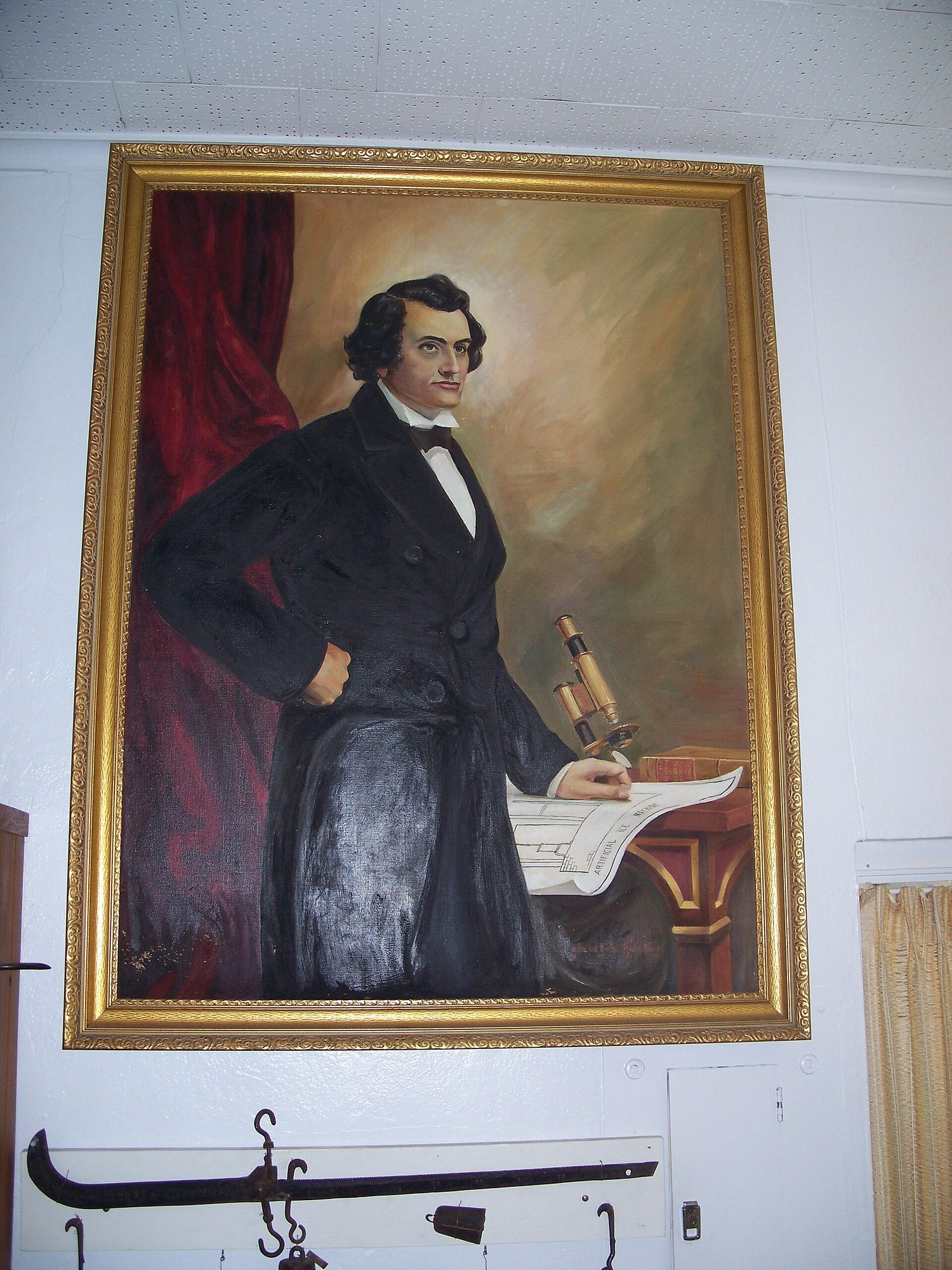
The other anchor is quieter. Dr. John Gorrie practiced medicine here, and in 1841 yellow fever tore through the town. He cooled sickrooms with ice, then built a machine to make it. He received an 1851 patent for mechanical refrigeration. The invention did not save every patient, but it outlived the fever. Gorrie is recognised as the father of air conditioning and refrigeration.
The John Gorrie Museum State Park on Sixth Street commemorates that work. The site was donated to the State of Florida in 1955, and the one-storey brick museum building was constructed in 1957. It is not a grand monument. It is a brick box with a purpose, much like the machine it honors.
Gorrie died in 1855, four years after his patent. He did not see the town name itself after him. But the museum is not about a man. It is about the idea that a doctor in a fever town could build a machine to fight the heat. That is the kind of history that does not need adjectives.
The Other Grounds
Orman House Historic State Park on Market Street holds a different kind of memory. Its grounds include the Chapman Botanical Garden and the Three Soldiers Detail South memorial. The house itself is not the festival; it is the pause between events. A place to walk, to see what a settled Apalachicola looked like when the timber money was new.
The park is open year-round. It does not headline the calendar, but it fills the gaps. The botanical garden does not rush. That is the point.
The Numbers Beneath the Events
The census data is not festive, but it is honest. Apalachicola has 2,304 people. The median age is 51.8 years. That is an older town, one that has seen cycles. Median household income is $61,083. The median home value is $247,900. Median gross rent is $1,235.
There are 1,506 housing units. Of those, 191 are held for seasonal or recreational use. Another 323 are vacant. That is roughly a third of the housing stock not occupied year-round. The festival brings tens of thousands for two days; the town itself sleeps 2,304. The gap between those numbers is the real story of Apalachicola’s calendar.
Unemployment is 5.8 percent. A bachelor’s degree or higher is held by 32.9 percent of residents. These are not boomtown figures. They are steady, working numbers.
What the Calendar Does
The Florida Seafood Festival is the main event because the town’s history is the main event. Sponging was a mainstay from the mid-1870s. In 1879, Apalachicola had 16 sponge vessels working. By 1895, between 80 and 120 men were employed in the trade. That industry faded, but the pattern did not: the water gives, the town processes, the people gather.
The festival is not a revival. It is a continuation. The 63rd annual is not a milestone; it is a cadence. The town has carried three names in as many decades—Cottonton, then West Point on incorporation in 1828, then Apalachicola from 1831. If a place can survive three names, it can survive a weekend of crowds.
The museum, the park, the festival grounds—they are the calendar. Nothing else needs to be invented. The river did the work. The town did the rest.
Every business named above is one we hold a listing for, and every date traces to a source on our sources page. We do not describe menus, interiors or service we have not verified. Details change — confirm before you travel.