Guides · Apalachicola, Florida
Why Apalachicola Is Where It Is
The town on the river’s last bend has been called three names, and each one marked a different reason to stay.
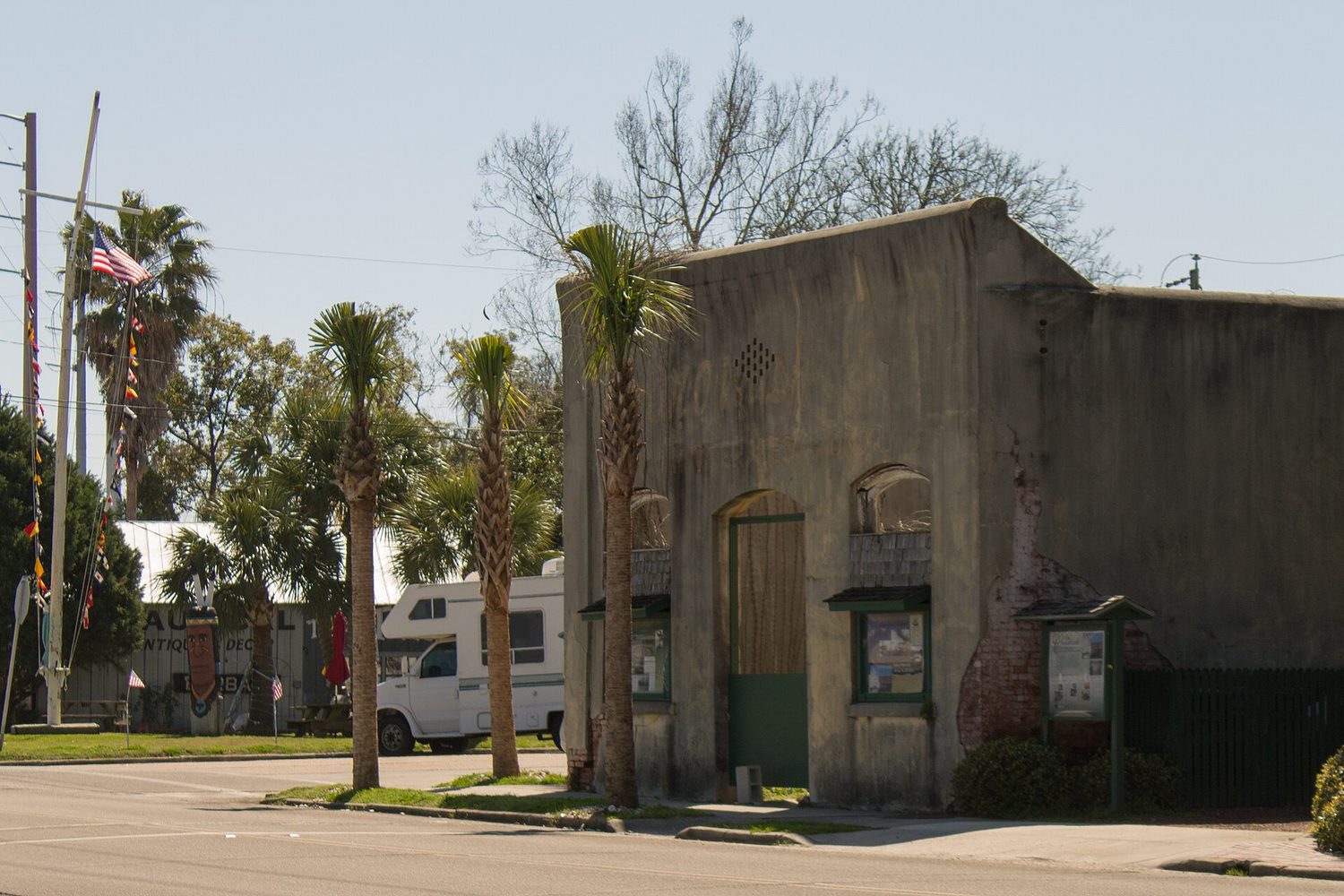
Three names
The settlement began as Cottonton. That name did not survive incorporation, when the place became West Point in 1828. Three years later, in 1831, it took the name that stuck: Apalachicola.
The renaming tracks the commodity. Cotton gave way to a port town at the mouth of a river that drained a third of the state. The location was the point, not the name. Vessels could load timber and cotton where the river met the bay, and the town grew because the geography forced it to.
Ice before air conditioning
Dr. John Gorrie arrived in the 1830s, a physician practising in a low, hot, mosquitoed town. In 1841, yellow fever ran through Apalachicola. Gorrie believed the sickrooms were the problem—the heat, the still air. He began cooling rooms with ice hauled from the north, which was expensive and unreliable. So he built a machine to make ice instead.
He received a patent for mechanical refrigeration in 1851. He died in 1855, before the invention made anyone rich. But the idea was his, and the town remembers it. The John Gorrie Museum State Park on Sixth Street stands on land donated to the State of Florida in 1955; the one-storey brick building was constructed in 1957. It is a quiet monument to a doctor who guessed that cold air could save lives.
The river gave timber
After the war, the river gave timber. The numbers are stark. Timber commerce rose from $2,000,000 in 1898 to $13,324,000 in 1903—a sixfold jump in five years. The town could not move that volume by boat alone. So the Apalachicola Northern Railroad was built, and its first engine reached town on 30 April 1907. The rail met the river, and the timber went out.
That is the pattern of Apalachicola. Each boom laid track for the next. The river brought the trees; the railroad took them away. The port stayed busy because the water stayed deep enough.
Sponges and oysters
Sponging began in earnest in the mid-1870s. In 1879, the town had 16 sponge vessels. By 1895, between 80 and 120 men worked the trade. They worked the flats off the coast, and the sponges went north. It was a solid industry, not a spectacular one.
Oysters were sold locally as early as 1836. The Ruge Brothers Canning Company was established in 1885 by Herman Ruge and his sons. That is the line that outlasted the others. The sponge boats are gone; the timber mills are quiet. Oysters still come out of the bay, and the town still cans them.
The waterfront is the point
Battery Park sits at the mouth of the Apalachicola River. It is the town's waterfront green, and it hosts the Florida Seafood Festival—billed as Florida's oldest maritime event, a two-day gathering that draws tens of thousands. The 2026 edition, on 6-7 November, is the 63rd annual. That is a long run for a small town.
Market Street holds the Orman House Historic State Park, whose grounds include the Chapman Botanical Garden and the Three Soldiers Detail South memorial. It is a place to walk, not a place to hurry through.
The town now
The census numbers show a place that is older than most. Population is 2,304 people. Median age is 51.8. Housing tells the story: 1,506 total units, 323 vacant, 191 held for seasonal or recreational use. The town empties out in summer, fills up in winter. Median home value is $247,900; median gross rent is $1,235. Household income sits at $61,083, with an unemployment rate of 5.8 percent. About a third of residents—32.9 percent—hold a bachelor's degree or higher.
Those are not boomtown numbers. They are steady-state numbers for a town that has seen booms come and go.
The reason it stays
Apalachicola is where it is because the river and the bay meet here. That is the whole answer. The town was not placed for the view or the climate. It was placed for the water, and the water has kept it alive through cotton, timber, sponges, and oysters. The names changed—Cottonton, West Point, Apalachicola—but the location never did. The river still ends here. The town is still there to meet it.
Every business named above is one we hold a listing for, and every date traces to a source on our sources page. We do not describe menus, interiors or service we have not verified. Details change — confirm before you travel.