Guides · Apalachicola, Florida
Apalachicola Water History: Timber, Sponges, Oysters
Apalachicola never had one industry. It had a sequence, each carried by the river and the bay, and each left the town different from how it found it.
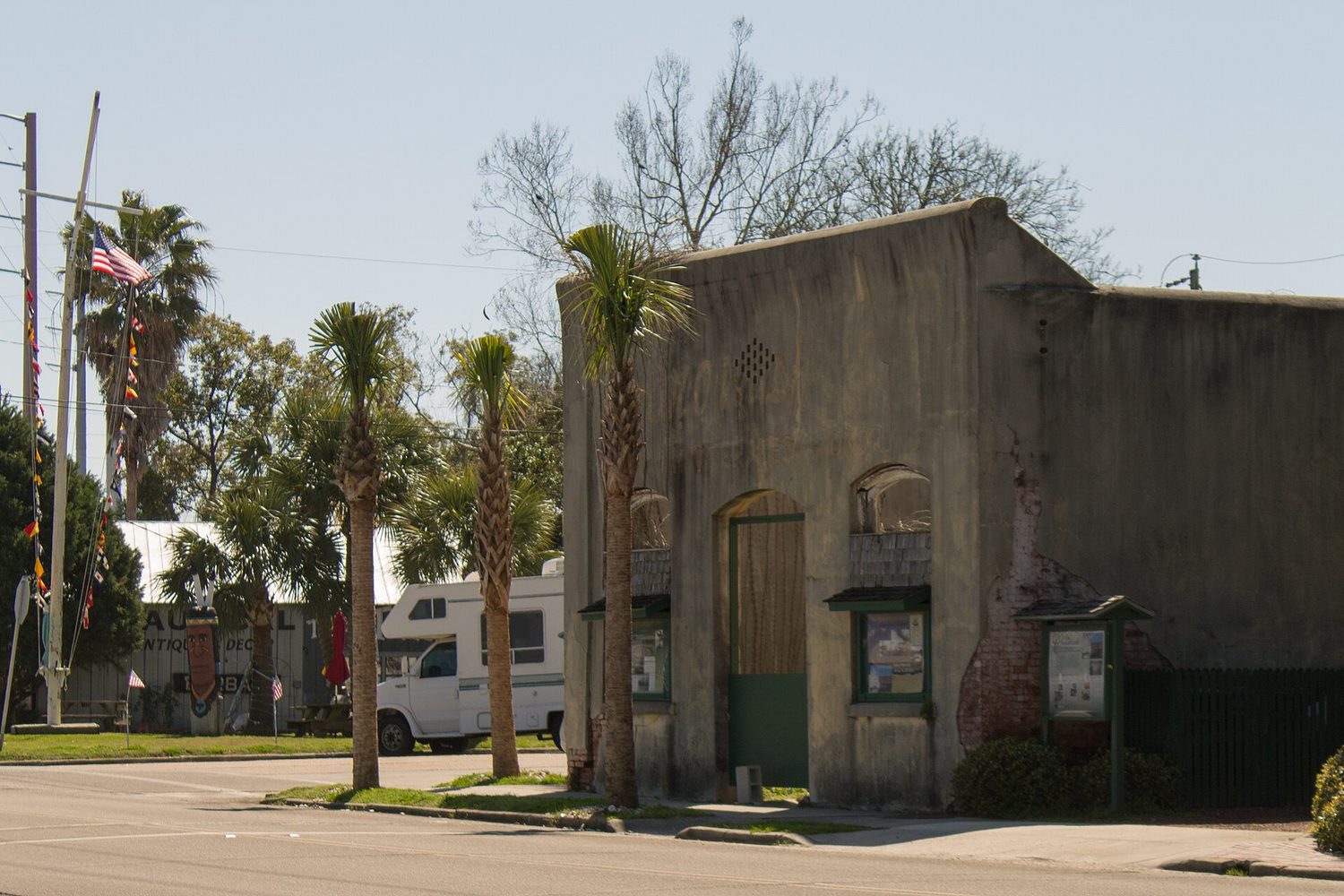
How Apalachicola Got Its Name and Why It Changed
The settlement began as Cottonton, incorporated as West Point in 1828, and took its final name in 1831. Three names in three decades suggest a place still deciding what it was. The geography did not change: a port at the mouth of the Apalachicola River, the Gulf of Mexico in front, a timber-rich watershed behind. That position set the commercial fate. Boats moved lumber, then sponges, then oysters. The town only had to keep pace with what floated in and out.
Dr. Gorrie's Ice Machine: A Lifesaving Invention in 1841
Dr. John Gorrie practised medicine in Apalachicola during the yellow fever outbreak of 1841. His patients were dying of fever, and he believed heat was part of the cause. He cooled sickrooms with ice, then built a mechanical ice-making machine to produce it. In 1851 he received a patent for mechanical refrigeration. The invention did not save his patients. It made him the father of air conditioning and refrigeration.
The town did not forget. The John Gorrie Museum State Park on Sixth Street exists to commemorate him. The site was donated to the State of Florida in 1955, and the one-storey brick museum building was constructed in 1957.
Timber, Sponges, and Oysters: The Industries That Built Apalachicola
The three water-borne industries did not overlap neatly. They replaced one another as resources and markets shifted.
Timber came first and largest. Exports rose from $2,000,000 in 1898 to $13,324,000 in 1903. The first Apalachicola Northern Railroad engine reached the town on 30 April 1907, tying the port to inland forests by rail as well as river.
Sponging had begun earlier. From the mid-1870s it was a mainstay: Apalachicola had 16 sponge vessels working in 1879, and by 1895 between 80 and 120 men were employed in the trade.
Oysters were sold locally as early as 1836, long before they became industrial. The Ruge Brothers Canning Company was established in 1885 by Herman Ruge and his sons. Canned oysters gave the town a product that could travel beyond the bay.
| Era | Industry | Scale |
|---|---|---|
| 1879 | Sponging | 16 sponge vessels |
| 1885 | Oysters | Ruge Brothers Canning Company established |
| 1895 | Sponging | 80–120 men employed |
| 1898–1903 | Timber | $2,000,000 to $13,324,000 in exports |
| 1907 | Timber | First Apalachicola Northern Railroad engine arrives |
Battery Park and the Florida Seafood Festival
Battery Park sits at the mouth of the Apalachicola River, the town's waterfront green. It is also the ground on which the Florida Seafood Festival is held. Billed as Florida's oldest maritime event, the two-day festival draws tens of thousands. The 2026 edition, on 6–7 November, is the 63rd annual.
The Town Today: Housing, Age, and the Shape of Its Economy
The census numbers describe a small, older, partly seasonal town. Population is 2,304 people, with a median age of 51.8 years. Of 1,506 total housing units, 323 are vacant and 191 are held for seasonal or recreational use—roughly one home in eight. Median home value is $247,900, and median gross rent is $1,235. Median household income is $61,083, and the unemployment rate is 5.8 percent. Just under a third of residents, 32.9 percent, hold a bachelor's degree or higher.
The figures fit the history. A town shaped by extractive water industries does not grow steadily; it swells and contracts with the resource. The seasonal units and the older median age suggest a place that now serves visitors as much as it ships goods.
Nearby Water Towns: A Day-Trip Comparison
The other towns in this guide are also water towns, each with a festival tied to its own harvest.
- St. George Island (9 miles): St. George Island Chili Cook-Off
- Port St. Joe (23 miles): Florida Scallop, Music & Arts Festival
- Perry (101 miles): Florida Forest Festival
- Steinhatchee (112 miles): Fiddler Crab Festival
- Cedar Key (141 miles): Cedar Key Seafood Festival
- Dade City (215 miles): Kumquat Festival
The distances matter. Apalachicola's festival draws tens of thousands to a town of 2,304. The others are smaller, closer to their own harvests. If you want the largest crowd, stay in Apalachicola. If you want the scallop boats or the fiddler crabs, drive. All of them are water towns, but each one harvests something different from it.
Common questions
- What is Apalachicola known for historically?
- Apalachicola is known for its maritime and industrial history. Oysters were sold locally as early as 1836, and the Ruge Brothers Canning Company was established in 1885. Timber commerce grew from $2,000,000 in 1898 to $13,324,000 in 1903. Dr. John Gorrie built a mechanical ice-making machine here in the 1840s.
- Who was Dr. John Gorrie and what did he do?
- Dr. John Gorrie practiced medicine in Apalachicola. During an 1841 yellow fever outbreak, he cooled sickrooms with ice and then built a mechanical ice-making machine. He received an 1851 patent for mechanical refrigeration and is recognized as the father of air conditioning and refrigeration. The John Gorrie Museum State Park commemorates his invention.
- What are the main attractions in Apalachicola?
- The John Gorrie Museum State Park on Sixth Street, built in 1957, and Orman House Historic State Park on Market Street, with the Chapman Botanical Garden, are key sites. Battery Park, at the mouth of the Apalachicola River, is the waterfront green and hosts the Florida Seafood Festival.
- When is the Florida Seafood Festival and where does it take place?
- The Florida Seafood Festival is a two-day event at Battery Park at the mouth of the Apalachicola River. It is billed as Florida's oldest maritime event, drawing tens of thousands. The 2026 edition, on November 6-7, is the 63rd annual.
- What was the town originally called?
- The settlement was incorporated as West Point in 1828 and took the name Apalachicola in 1831. It carried three names in as many decades: first Cottonton, then West Point, and finally Apalachicola from 1831.
- Can you tell me about the sponge industry in Apalachicola?
- Sponging was a mainstay from the mid-1870s. In 1879, Apalachicola had 16 sponge vessels working. By 1895, between 80 and 120 men were employed in the trade.
Every business named above is one we hold a listing for, and every date traces to a source on our sources page. We do not describe menus, interiors or service we have not verified. Details change — confirm before you travel.