Guides · Apalachicola, Florida
Apalachicola Architecture: Reading the Buildings of Florida's Historic
The town’s architecture is not decoration. It is a ledger of boom and bust, written in brick, timber, and iron.
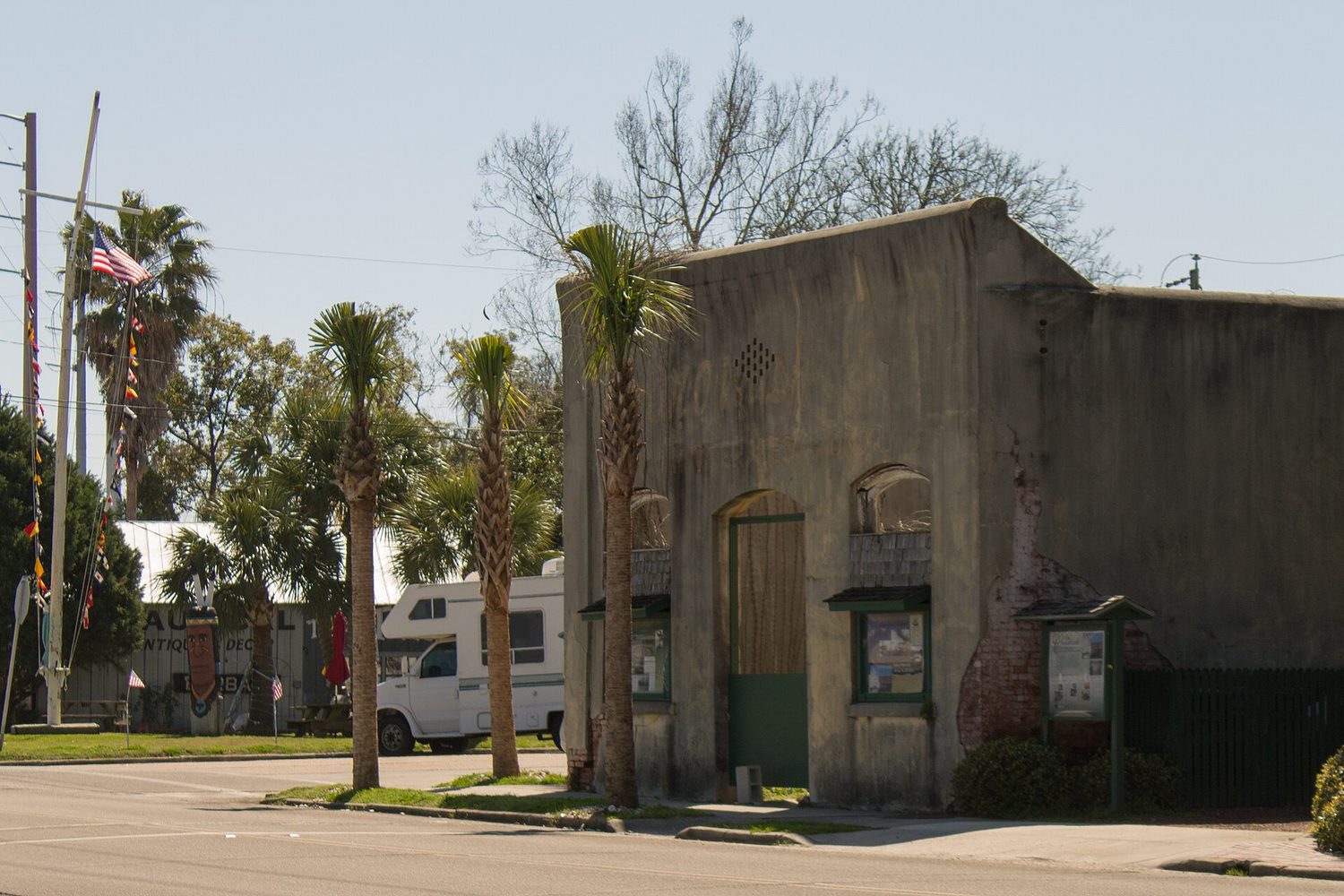
How Apalachicola Got Its Start: Three Names, One Waterfront
The settlement at the mouth of the Apalachicola River carried three names in as many decades. It began as Cottonton, was incorporated as West Point in 1828, and took the name Apalachicola in 1831. The renaming tracks a shift in purpose. West Point was a claim; Apalachicola was a destination. The town sat at the river's mouth, the only deep-water port on Florida's Gulf coast between Pensacola and Tampa, which made it the natural outlet for cotton, lumber, and goods moving between the Gulf and the interior. The name change marked the moment the place stopped being a frontier outpost and became a commercial hinge.
Dr. John Gorrie's Ice Machine: A Legacy in Apalachicola
Dr. John Gorrie (1803–1855) practised medicine in Apalachicola, where an 1841 yellow fever outbreak led him to cool sickrooms with ice. He then built a mechanical ice-making machine to produce it. He received an 1851 patent for mechanical refrigeration, and the John Gorrie Museum State Park on Sixth Street was later built to commemorate the invention. The site was donated to the State of Florida in 1955, and the one-storey brick museum building was constructed in 1957. The building itself is modest; the idea it memorialises is not. Gorrie is recognised as the father of air conditioning and refrigeration, and his machine was a direct answer to a local, lethal problem. The fever did not care that the town was prosperous. The machine was a doctor's response, not an industrialist's.
Timber, Sponges, and Oysters: Industries That Built Apalachicola's Streets
The built environment of Apalachicola is a material record of extractive cycles. Timber commerce rose from $2,000,000 in 1898 to $13,324,000 in 1903, and the first Apalachicola Northern Railroad engine reached the town on 30 April 1907. That railroad was built to move timber faster, and the warehouses and docks it fed are still visible in the commercial district. Sponging was a mainstay from the mid-1870s: Apalachicola had 16 sponge vessels working in 1879, and by 1895 between 80 and 120 men were employed in the trade. The sponge warehouses along the waterfront followed the same pattern—wide, open, and built for volume. Oysters were sold locally as early as 1836, and the Ruge Brothers Canning Company was established in 1885 by Herman Ruge and his sons. The packing houses that line the river are the most durable of the three industries, because oysters never stopped being harvested. Timber was cut out; sponges were overfished. Oysters remained.
| Apalachicola's Economic Eras at a Glance | |
|---|---|
| Era | Key Industry or Event |
| 1836–1885 | Local oyster sales; Ruge Brothers Canning Company established in 1885 |
| 1870s–1890s | Sponging mainstay; 16 vessels in 1879; 80–120 men by 1895 |
| 1898–1907 | Timber boom; railroad arrives 30 April 1907 |
| 1955–1957 | John Gorrie Museum site donated and built |
Battery Park and the Florida Seafood Festival in Apalachicola
Battery Park, at the mouth of the Apalachicola River, is the town's waterfront green. Most of the year it is open space and river view. In early November it becomes the ground for the Florida Seafood Festival, billed as Florida's oldest maritime event. The 2026 edition, on 6–7 November, is the 63rd annual. The festival draws tens of thousands to a town of 2,304 people. That is the point of a park at a river's mouth: it can hold a crowd, and it can hold a history. The same ground that once saw sponges unloaded and timber stacked now hosts a two-day event that turns the waterfront into a stage.
The Orman House: Apalachicola's Architecture of Wealth
Orman House Historic State Park on Market Street is a different kind of record. Where the warehouses speak of volume, the Orman House speaks of permanence. The house is an example of antebellum prosperity, built when Apalachicola's cotton trade made some men very rich. Its grounds include the Chapman Botanical Garden and the Three Soldiers Detail South memorial. The house is not a factory or a dock. It is a residence, and its survival is a statement about which parts of the town's history were considered worth keeping. The workers' housing and the packing sheds are gone or repurposed. The merchant's house remains, maintained by the state.
Apalachicola Today: Census Data and Economic Change
The census figures describe a town that has stopped being an industrial port and has not yet settled into something else. Population is 2,304 people, with a median age of 51.8 years. There are 1,506 total housing units, of which 191 are held for seasonal or recreational use and 323 are vacant. The median home value is $247,900; the median gross rent is $1,235. Median household income is $61,083, and the unemployment rate is 5.8 percent. Bachelor's degree or higher: 32.9 percent. The numbers show a place where housing is expensive relative to income, where a fifth of the homes are empty for much of the year, and where the median age suggests people retire here more often than they start careers here. The buildings that once stored timber and sponges now hold galleries, shops, and offices. The economy did not vanish. It changed its shape, and the buildings changed with it.
Reading the buildings of Apalachicola means reading the sequence: cotton, timber, sponges, oysters, refrigeration, and now tourism. Each left a structure behind. None of them left the town empty.
Common questions
- What is Apalachicola known for historically?
- Apalachicola is known for the 1841 yellow fever outbreak that led Dr. John Gorrie to build a mechanical ice-making machine, patented in 1851. He is recognized as the father of air conditioning and refrigeration. The John Gorrie Museum State Park commemorates this.
- When was Apalachicola founded and what was it called before?
- The settlement was incorporated as West Point in 1828 and renamed Apalachicola in 1831. Before that, it was called Cottonton. So it carried three names in as many decades.
- What is the Florida Seafood Festival and when is it?
- The Florida Seafood Festival is billed as Florida's oldest maritime event, held at Battery Park at the mouth of the Apalachicola River. The 2026 edition, on November 6-7, is the 63rd annual, drawing tens of thousands.
- What are the main historical industries in Apalachicola?
- Sponging was a mainstay from the mid-1870s, with 16 sponge vessels in 1879 and 80-120 men by 1895. Oysters were sold locally as early as 1836, and the Ruge Brothers Canning Company was established in 1885. Timber commerce rose sharply from $2 million in 1898 to over $13 million in 1903.
- What is the John Gorrie Museum State Park?
- It is a one-storey brick museum on Sixth Street, built in 1957 on a site donated to the State of Florida in 1955. It commemorates Gorrie's 1851 patent for mechanical refrigeration, the invention he developed after cooling sickrooms with ice during the 1841 yellow fever outbreak.
- What is the demographic profile of Apalachicola?
- The population is 2,304 people, with a median age of 51.8 years. Median household income is $61,083, median home value is $247,900, and median gross rent is $1,235. 32.9% hold a bachelor's degree or higher, and the unemployment rate is 5.8%.
Every business named above is one we hold a listing for, and every date traces to a source on our sources page. We do not describe menus, interiors or service we have not verified. Details change — confirm before you travel.