Guides · Apalachicola, Florida
Apalachicola History: Sponges, Oysters, Timber & Ice
Apalachicola’s prosperity came in quick, extractive bursts—sponges, oysters, timber, ice. Each one left a trace you can still read in the town’s streets, parks, and museums.
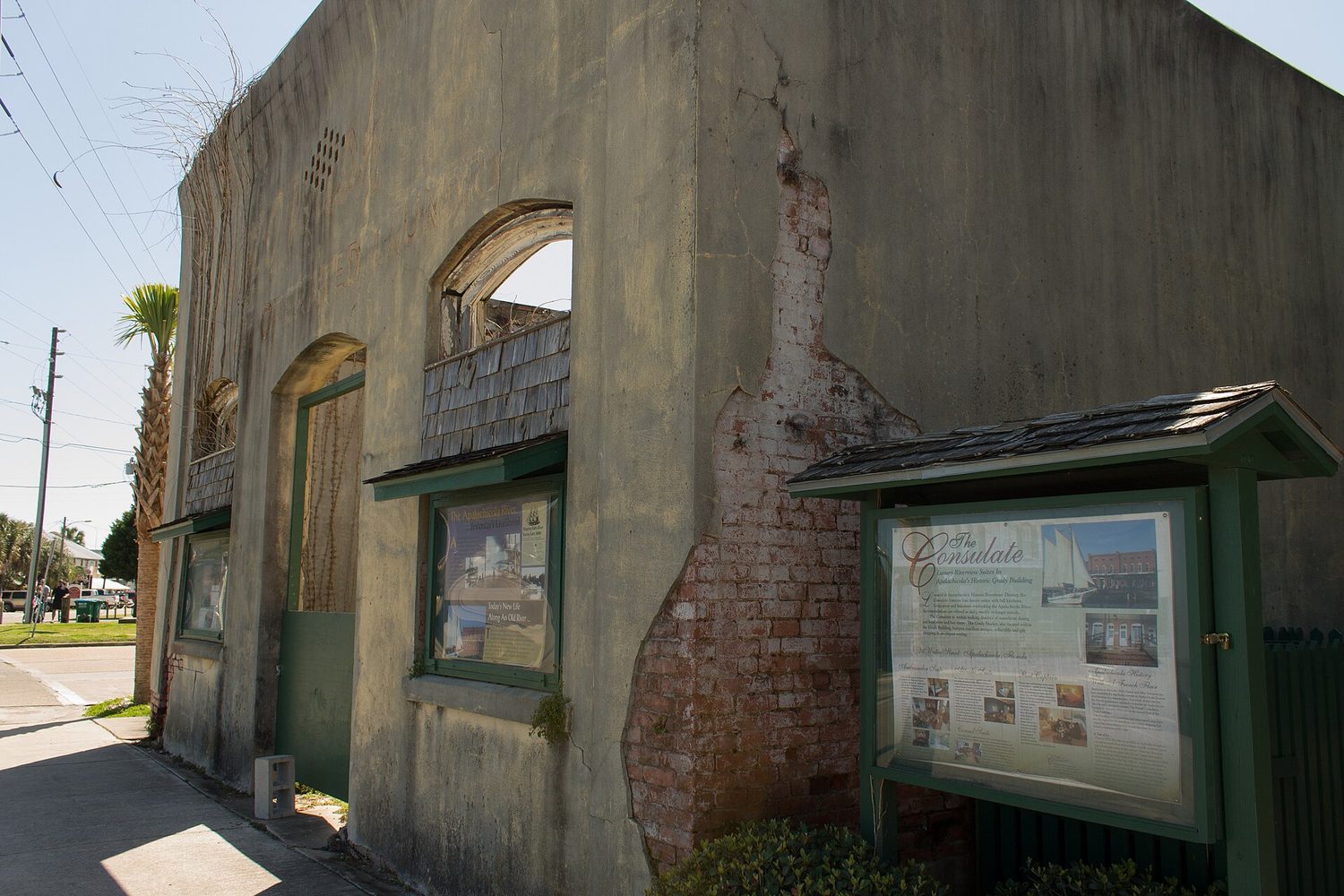
How Apalachicola Got Its Name: From Cottonton to a River Town
The settlement began as Cottonton. It took the name West Point on incorporation in 1828. Then, in 1831, it became Apalachicola. Three names in as many decades. The river mouth dictated the town’s commercial role from the start: a deep-water outlet for goods moving down from the interior, and a harbor for vessels working the Gulf. The final renaming, drawn from the river itself, fixed the town’s identity to its geography.
Sponges and Oysters: Apalachicola's First Big Industries
Sponging became a mainstay in the mid-1870s. In 1879, Apalachicola had 16 sponge vessels working the beds. By 1895, between 80 and 120 men were employed in the trade. It was labor-intensive, keyed to the shallow Gulf waters, and it made the town a supplier to markets that had previously looked to the Mediterranean.
Oysters were sold locally as early as 1836. The industry scaled up with the Ruge Brothers Canning Company, established in 1885 by Herman Ruge and his sons. Canning turned a perishable local product into a shippable commodity. The sponges went out, the oysters went into tins, and the waterfront worked on both.
Timber and Railroads: Apalachicola's Boom Years
Timber commerce rose from $2,000,000 in 1898 to $13,324,000 in 1903—a sixfold increase in five years. The town became a shipping hub for lumber cut from the surrounding pine forests, floated down the river or brought in by rail. The first Apalachicola Northern Railroad engine reached the town on 30 April 1907, linking the port directly to inland timberlands and accelerating the export trade.
The boom was fast and extractive. The forests were cut, the rails arrived, and the town’s economy shifted with each resource that was pulled out and shipped away.
Dr. John Gorrie: The Ice Machine That Started in Apalachicola
In 1841, a yellow fever outbreak swept Apalachicola. Dr. John Gorrie (1803–1855), practising medicine in the town, began cooling sickrooms with ice to reduce fevers. Ice had to be imported, which was expensive and unreliable. He set out to make it mechanically, and in 1851 he received a patent for mechanical refrigeration—the invention that would make him the recognized father of air conditioning and refrigeration.
The connection between a Florida fishing town and a machine that makes ice is direct: the fever, the need for cold, and the refusal to depend on imported ice. Gorrie died in 1855, but the patent outlived him. The John Gorrie Museum State Park on Sixth Street was built to commemorate it. The site was donated to the State of Florida in 1955, and the one-storey brick museum building was constructed in 1957.
Apalachicola Today: Parks, Memorials, and the Seafood Festival
The industrial past is legible in the town’s public spaces. Battery Park, at the mouth of the Apalachicola River, is the waterfront green and the ground on which the Florida Seafood Festival is held—billed as Florida’s oldest maritime event, a two-day draw of tens of thousands. The 2026 edition, on 6–7 November, is the 63rd annual.
Orman House Historic State Park on Market Street holds the Chapman Botanical Garden and the Three Soldiers Detail South memorial. The Gorrie Museum marks the town’s most consequential invention. None of these sites is a working reminder of the sponge fleet or the timber boom. They are commemorations, set in a town that now runs on a different economy.
Apalachicola by the Numbers: A Small Town's Demographics
The census figures describe a small, settled place. Population is 2,304. Median age is 51.8 years. More than a third of residents—32.9 percent—hold a bachelor’s degree or higher, a striking figure for a town this size. Median household income is $61,083, and the median home value is $247,900. Median gross rent is $1,235. Unemployment sits at 5.8 percent.
Of 1,506 total housing units, 323 are vacant and 191 are held for seasonal or recreational use. That is a town with a meaningful second-home presence and a post-boom demographic profile: older, educated, and not growing rapidly. The seasonal units track the rhythms of the seafood festival and the tourist tide, not the year-round churn of the sponge fleet or the timber yards.
Apalachicola’s Extractive Eras at a Glance
| Industry | Key Dates & Scale |
|---|---|
| Sponging | Mainstay from mid-1870s; 16 vessels in 1879; 80–120 men by 1895 |
| Oyster canning | Local sales from 1836; Ruge Brothers Canning Company established 1885 |
| Timber | Commerce rose from $2,000,000 in 1898 to $13,324,000 in 1903 |
| Ice / refrigeration | 1841 yellow fever outbreak; Gorrie’s experiments; 1851 patent; museum built 1957 |
What made Apalachicola wealthy, in order: sponges, then oysters, then timber, with ice as the outlier—an invention born of a fever, not a harvest. The sponge fleet and the timber industry collapsed as their resources ran out. The oyster trade persists but in a different form than the Ruge Brothers’ canning operation. What a visitor can see today—the parks, the memorials, the festival grounds, the museum—are the physical records of those eras, preserved because the industries themselves are gone.
Common questions
- Who built the first ice machine in Apalachicola?
- Dr. John Gorrie, a physician practicing in Apalachicola, built a mechanical ice-making machine after the 1841 yellow fever outbreak. He cooled sickrooms with ice and received an 1851 patent for mechanical refrigeration. He is recognized as the father of air conditioning and refrigeration.
- What is the John Gorrie Museum State Park?
- It is a one-storey brick museum on Sixth Street, constructed in 1957 on a site donated to the State of Florida in 1955. The museum commemorates Gorrie's 1851 patent for mechanical refrigeration.
- When did Apalachicola get its name?
- The settlement was incorporated as West Point in 1828 and took the name Apalachicola in 1831. Earlier it was called Cottonton, so it carried three names in as many decades.
- What industries built Apalachicola historically?
- Sponging was a mainstay from the mid-1870s, with 16 sponge vessels in 1879 and 80-120 men by 1895. Oysters were sold locally from 1836, and the Ruge Brothers Canning Company started in 1885. Timber commerce rose from $2,000,000 in 1898 to $13,324,000 in 1903.
- What is the Florida Seafood Festival?
- It is billed as Florida's oldest maritime event, a two-day festival at Battery Park at the mouth of the Apalachicola River. It draws tens of thousands. The 2026 edition, on 6-7 November, is the 63rd annual.
- Where is Battery Park and what is there?
- Battery Park is at the mouth of the Apalachicola River, the town's waterfront green. It is the ground on which the Florida Seafood Festival is held.
Every business named above is one we hold a listing for, and every date traces to a source on our sources page. We do not describe menus, interiors or service we have not verified. Details change — confirm before you travel.