Guides · Apalachicola, Florida
Living in Apalachicola, FL: What to Know
Apalachicola holds 2,304 people, a median age of 51.8 years, and 323 vacant housing units. Its quiet streets are the residue of a 19th-century boom built on timber, sponges, oysters, and ice.
A River Town That Outlived Its Industries
The settlement incorporated as West Point in 1828, after being called Cottonton, and took the name Apalachicola in 1831. Three names in three decades suggest a place still deciding what it was. What it became was an industrial port. Timber commerce rose from $2,000,000 in 1898 to $13,324,000 in 1903. The first Apalachicola Northern Railroad engine reached town on 30 April 1907, tying the river trade to the rail network.
Sponging began as a mainstay in the mid-1870s. In 1879, Apalachicola had 16 sponge vessels working the Gulf. By 1895, between 80 and 120 men were employed in the trade. Oysters were sold locally as early as 1836, and the Ruge Brothers Canning Company was established in 1885 by Herman Ruge and his sons. The river carried all of it out; the money built the town. Those industries faded, but their physical imprint—the waterfront, the canneries' sites, the rail corridor—remains the town's skeleton.
John Gorrie's Ice Machine and the Yellow Fever Crisis
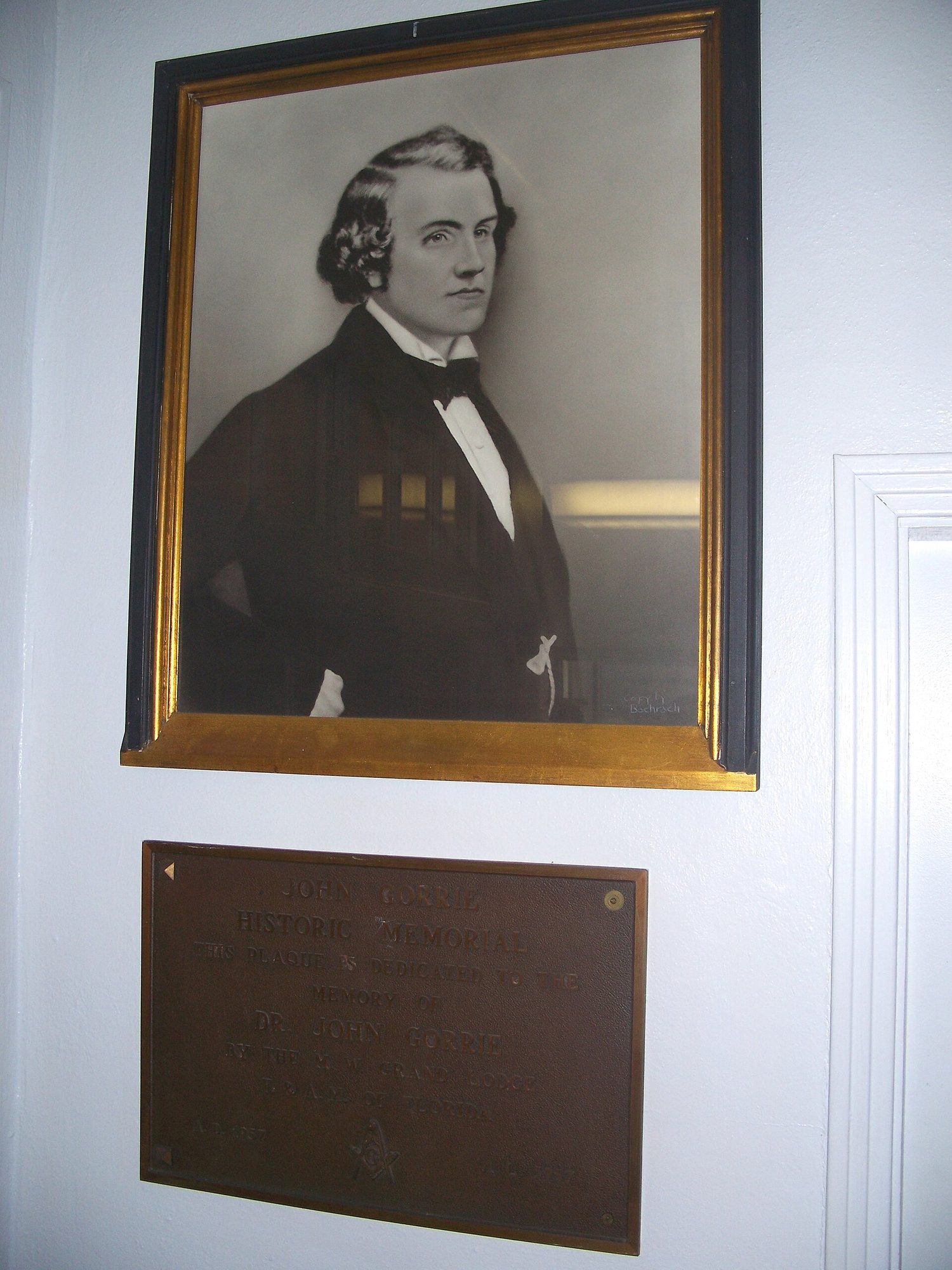
The same river that moved timber also carried yellow fever. In 1841, an outbreak hit Apalachicola, and Dr. John Gorrie (1803–1855), practicing medicine here, responded by cooling sickrooms with ice. When ice was scarce and expensive, he built a machine to make it mechanically. He received an 1851 patent for mechanical refrigeration and is recognized as the father of air conditioning and refrigeration.
The town built a museum to commemorate him. The site on Sixth Street was donated to the State of Florida in 1955, and the one-storey brick building was constructed in 1957. John Gorrie Museum State Park now stands as the only place in the country dedicated to the man who turned a fever response into the basis of modern cooling.
Battery Park, Orman House, and the Florida Seafood Festival
At the mouth of the Apalachicola River sits Battery Park, the town's waterfront green. It is the ground on which the Florida Seafood Festival is held—a two-day event billed as Florida's oldest maritime event, drawing tens of thousands. The 2026 edition, on 6–7 November, is the 63rd annual.
Further along, Orman House Historic State Park on Market Street offers a different kind of civic space. Its grounds include the Chapman Botanical Garden and the Three Soldiers Detail South memorial. The park and the battery anchor the town's public life: one for remembrance, one for congregation.
The Numbers Behind the Quiet Streets
The census tells the story plainly. Apalachicola has 1,506 total housing units. Of those, 323 are vacant—more than one in five. Another 191 are held for seasonal or recreational use. The permanent population of 2,304 is spread thin across a housing stock that is largely unoccupied most of the year.
| Measure | Value |
|---|---|
| Population | 2,304 people |
| Median age | 51.8 years |
| Total housing units | 1,506 units |
| Vacant housing units | 323 units |
| Seasonal or recreational use | 191 units |
| Median home value | $247,900 |
| Median gross rent | $1,235 |
| Median household income | $61,083 |
| Unemployment rate | 5.8% |
| Bachelor's degree or higher | 32.9% |
The median age of 51.8 years and the high vacancy rate indicate a town whose permanent residents skew older and whose homes are often empty. The median home value of $247,900 and median gross rent of $1,235 are modest by Florida coastal standards, but the unemployment rate of 5.8 percent is above the national average. Median household income sits at $61,083, and 32.9 percent of residents hold a bachelor's degree or higher.
Living With the Seasons
The 191 seasonal units and the festival's tens of thousands of visitors create a rhythm of quiet and crowd. For most of the year, the town's streets reflect the census: small, older, slow. Then, on the first weekend of November, Battery Park fills, parking tightens, and the population effectively multiples for two days.
Nearby towns run on similar cycles. St. George Island, nine miles away, hosts the Chili Cook-Off. Port St. Joe, 23 miles, has the Florida Scallop, Music & Arts Festival. Perry, 101 miles, holds the Florida Forest Festival. Steinhatchee, 112 miles, runs the Fiddler Crab Festival. Cedar Key, 141 miles, does the Seafood Festival, and Dade City, 215 miles, the Kumquat Festival. Apalachicola's festival is the oldest and the largest of these, but the pattern is regional: small coastal towns that inhale visitors for a weekend and exhale them for the rest of the year.
What the Future Holds
Apalachicola's challenge is not a lack of history; it has more than most. The question is whether a town with 2,304 permanent residents, a 5.8 percent unemployment rate, and over 500 vacant or seasonal homes can maintain its museums, parks, and waterfront without becoming merely a weekend destination. The John Gorrie museum, the Orman House, and Battery Park are maintained by the state and the festival, but they depend on visitors who come, see, and leave.
The river built the town, then the industries left. What remains is a compact, walkable place where the 19th century is still visible in the parks and the brick museum, and where the 21st century shows up mostly in November. The median age suggests the permanent population is not replacing itself quickly. The vacant units suggest the housing stock is waiting for someone to fill it. Apalachicola has outlived its industries before. Whether it outlives its seasonality is the open question.
Common questions
- What is Apalachicola known for historically?
- Apalachicola is known for its 19th-century maritime and industrial history. It was a center for sponging, oystering, and timber. Dr. John Gorrie invented mechanical refrigeration here in 1851 to cool sickrooms during a yellow fever outbreak.
- Who was John Gorrie and why is he important?
- Dr. John Gorrie was a physician in Apalachicola. After an 1841 yellow fever outbreak, he built an ice-making machine to cool patients' rooms. He received a patent in 1851 and is recognized as the father of air conditioning and refrigeration. The John Gorrie Museum State Park commemorates him.
- What are the main attractions in Apalachicola?
- Main attractions include the John Gorrie Museum State Park on Sixth Street, Orman House Historic State Park on Market Street with its Chapman Botanical Garden, and Battery Park at the river mouth, which hosts the Florida Seafood Festival.
- What is the Florida Seafood Festival?
- It is Florida's oldest maritime event, a two-day festival held at Battery Park. It draws tens of thousands. The 2026 edition, on November 6-7, is the 63rd annual.
- What is the population and demographic of Apalachicola?
- The population is 2,304. The median age is 51.8 years. About 32.9% of residents have a bachelor's degree or higher. The median household income is $61,083, and the median home value is $247,900.
- What are the housing options like in Apalachicola?
- There are 1,506 total housing units. Of those, 323 are vacant, and 191 are held for seasonal or recreational use. The median gross rent is $1,235 per month.
Every business named above is one we hold a listing for, and every date traces to a source on our sources page. We do not describe menus, interiors or service we have not verified. Details change — confirm before you travel.